%20(2).png)

Targeting the Root Cause: Reducing Inflammation and Normalising Estrogen
Summary
- Many individuals struggle with a silent battle where imbalanced estrogen levels and chronic inflammation are deeply interconnected, often creating a self-perpetuating cycle that significantly affects overall health and well-being.
- The gut microbiome significantly influences estrogen metabolism, with imbalances (dysbiosis) potentially leading to elevated estrogen levels through excessive beta-glucuronidase activity.
- Personalised probiotic therapy, like that offered by Gutgutgoose, targets these mechanisms by modulating beta-glucuronidase and supporting a balanced inflammatory response, providing what many consider the best probiotics for gut health.
- Clinical data, stemming from advanced microecological studies, indicates that such targeted interventions can lead to more balanced estrogen levels and support balanced inflammatory markers.
- Beyond objective lab markers, individuals often report improved well-being, improved daily comfort, and a renewed sense of vitality, suggesting a more comprehensive and effective approach to hormonal and inflammatory health.
Why it matters: Addressing the underlying gut microbiome imbalances offers a proactive and foundational strategy for individuals seeking to support healthy hormonal balance and inflammatory responses, moving beyond mere symptom management.
Many individuals silently battle with the frustrating interplay between hormonal balance and chronic inflammatory states. While conventional approaches often focus on symptom management, emerging research and clinical practise now show how Gutgutgoose's personalised probiotic approach addresses the fundamental mechanisms contributing to these conditions - specifically imbalanced estrogen levels and systemic inflammation. It's about getting to the root cause, not just treating the leaves.
Understanding the Estrogen-Inflammation Connection
Estrogen plays a complex and important role in women's health, influencing reproductive function, bone density, cardiovascular health, and immune responses. However, when estrogen levels become dysregulated, this potent hormone can unfortunately exacerbate inflammatory conditions and contribute to chronic health challenges [1]. Imagine estrogen as a double-edged sword: essential for many bodily functions, but capable of causing significant distress when out of balance.
Research demonstrates that estrogen signalling directly modulates inflammatory processes within the body. In metabolic inflammation, a low-grade inflammatory state linked to various chronic conditions like obesity and type 2 diabetes, estrogen acts as both a protective and potentially problematic factor, depending on its concentration and receptor activity [2]. This bidirectional relationship between estrogen and inflammation creates a reinforcing cycle that can perpetuate various health imbalances, leaving individuals feeling stuck.
Understanding this connection matters because it reveals why addressing estrogen and inflammation separately often proves insufficient. The two systems are intimately linked, each influencing the other in ways that can either support health or contribute to chronic imbalance.
The Gut Microbiome's Role in Estrogen Metabolism
For many, discovering the gut's deep connection to hormones is an 'aha!' moment. The gut microbiome plays a critical role in estrogen regulation through the enterohepatic circulation, a process whereby hormones are metabolised in the liver, secreted into bile, and then either reabsorbed or eliminated through the digestive tract. Specific bacterial strains produce an enzyme called beta-glucuronidase, which deconjugates estrogen metabolites, allowing them to be reabsorbed into circulation rather than eliminated [3].
When the gut microbiome is imbalanced (dysbiosis), beta-glucuronidase activity can become excessive — a process closely tied to how bacterial shifts can destroy the intestinal barrier. This leads to elevated circulating estrogen levels, which can contribute to a state of estrogen dominance. In this scenario, the ratio between estrogen and other hormones, like progesterone, becomes skewed, contributing to a cascade of hormonal symptoms and inflammatory conditions.
This understanding reveals a important intervention point: by addressing gut microbiome imbalances — as demonstrated in dysbiome transplant studies — we can influence estrogen metabolism at its source. This is where targeted microecological therapy becomes particularly valuable.
Microecological Therapy: A Targeted Approach
Microecological therapy employs personalised probiotics to rebalance the gut microbiome and modulate hormone metabolism. Unlike generic probiotic formulations that offer a one-size-fits-all approach, this method targets imbalances where estrogen plays an important part by specifically supporting healthy beta-glucuronidase activity. This is where the concept of a customised probiotic truly shines.
Recent clinical evidence, from studies evaluating advanced microecological therapies, demonstrates the effectiveness of this strategy. For example, in controlled studies, microecological therapy successfully supported balanced estrogen levels:
| Group | Average Estrogen Concentration (pg/mL) |
|---|---|
| Therapy Group | 91.4 |
| Control Group | 123.5 |
This is a clinically meaningful shift toward hormonal equilibrium, offering hope for individuals seeking hormonal balance.
Gutgutgoose's customised probiotic formulations take this concept further. By analysing over 300 bacterial strains from at-home stool tests, Gutgutgoose creates precision formulas matched to each individual's unique gut microbiome. This personalised approach ensures that the specific strains most beneficial for supporting healthy estrogen metabolism are included in therapeutic concentrations, making them probiotics that actually work for your body.
This precision targeting is essential because not all probiotic strains affect estrogen metabolism equally. By identifying and delivering the specific strains your microbiome needs, microecological therapy addresses hormonal imbalances at their microbial root.
Supporting a Healthy Inflammatory Response
Beyond hormonal regulation, microecological therapy supports healthy inflammatory responses, another fundamental aspect of systemic imbalances. Chronic inflammation, characterised by elevated pro-inflammatory cytokines, can perpetuate tissue discomfort and pain associated with various conditions — even extending to mitochondrial fragmentation and brain innate immunity [4]. Imagine your body's immune system constantly on high alert; microecological therapy helps calm this overactivity.
Clinical data reveals significant shifts in key markers of inflammation following microecological therapy:
| Marker | Before Therapy (pg/mL) | After Therapy (pg/mL) | Change |
|---|---|---|---|
| IL-6 | 25.9 | 17.1 | 34% |
| TNF-α | 36.4 | 25.2 | 31% |
These inflammatory cytokines play central roles in discomfort signalling and cellular communication. IL-6 contributes to both local and systemic inflammatory responses, whilst TNF-α promotes inflammatory cascades [5]. Reducing these markers indicates a body moving towards a more balanced and comfortable state.
The reduction in these inflammatory markers is particularly significant because chronic elevation of IL-6 and TNF-α contributes to a wide range of health challenges, from metabolic dysfunction to tissue discomfort. By supporting a balanced inflammatory response through targeted probiotic therapy, individuals can address a fundamental driver of many chronic health concerns.
Breaking the Estrogen-Inflammation Cycle
The relationship between estrogen and inflammation creates a challenging, self-perpetuating cycle. Chronic inflammation can impact liver function and enzyme activity, potentially compromising the body's ability to metabolise and eliminate estrogen effectively. Simultaneously, elevated estrogen levels can trigger inflammatory responses, particularly in hormone-sensitive tissues. This gut-driven inflammatory cascade mirrors patterns seen in research showing Parkinson's may begin in the gut [6]. It's a vicious cycle that can leave individuals feeling helpless.
Microecological therapy addresses both sides of this equation, offering a dual mechanism of action:
- Supporting estrogen balance through modulated beta-glucuronidase activity in the gut.
- Supporting a balanced inflammatory response through immune-modulating probiotic strains.
This dual mechanism targets underlying imbalances rather than merely masking symptoms, offering a more comprehensive and sustainable approach to supporting overall health. By simultaneously addressing both estrogen metabolism and inflammatory pathways, microecological therapy breaks the reinforcing cycle that perpetuates hormonal and inflammatory imbalances.
This integrated approach is a fundamental shift from conventional strategies that address hormones or inflammation in isolation. By recognising and targeting the interconnected nature of these systems, microecological therapy offers a more complete solution.
Clinical Outcomes: Comfort and Quality of Life
The biological changes induced by microecological therapy translate into meaningful, real-world improvements in overall well-being. Individuals often express a sense of relief and renewed quality of life. Postoperative comfort scores and quality of life scores in studies showed substantial improvements:
| Measure | Therapy Group | Control Group | Improvement |
|---|---|---|---|
| VAS Score (Comfort) | 1.9 | 3.6 | 47% |
| Quality of Life Score | 79.4 | 62.7 | 27% |
This 47% reduction in VAS scores is a substantial improvement in daily comfort and function. quality of life scores increased markedly. These outcomes demonstrate that supporting underlying hormonal and inflammatory balances can produce tangible benefits that extend beyond laboratory markers to real-world health improvements, allowing individuals to live more comfortably and fully.
These improvements in comfort and quality of life are not merely subjective feelings; they represent measurable changes in how individuals experience their daily lives. From reduced discomfort to improved energy and well-being, the benefits of addressing root-cause imbalances manifest in ways that truly matter to those experiencing hormonal and inflammatory challenges.
The Gutgutgoose Difference: Precision Probiotics for Hormonal Health
Gutgutgoose's approach is the next evolution in probiotic therapy. Rather than offering one-size-fits-all formulations found on most shelves, Gutgutgoose analyses your unique microbiome composition through metagenomic DNA sequencing to identify specific bacterial imbalances affecting estrogen metabolism and inflammatory pathways. This precision makes Gutgutgoose a leader in personalised probiotics Australia.
The AI-powered modelling examines over 300 bacterial strains to create customised formulas manufactured in TGA-licensed compounding facilities in Queensland. This ensures pharmaceutical-grade quality whilst delivering the precise strains your microbiome requires to support hormonal balance and a healthy inflammatory response. This meticulous approach helps deliver the best probiotics for gut health.
Verification Through DNA Testing
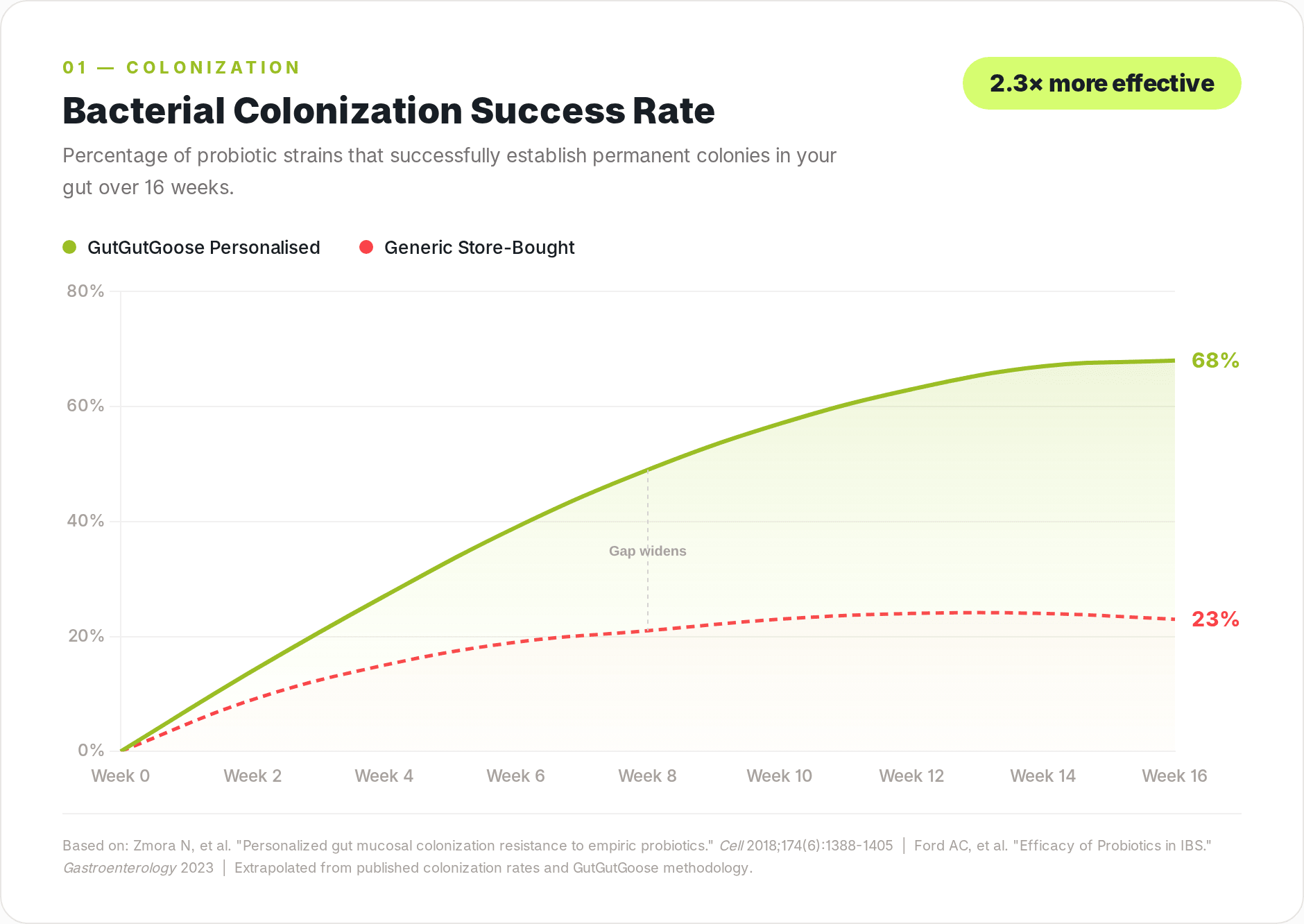
Unlike conventional probiotics that often cannot demonstrate colonisation, Gutgutgoose provides quarterly DNA verification. This proves that the prescribed strains have successfully established themselves and are thriving in your gut. This data-driven approach allows for monitoring of effectiveness and adjustment of formulations based on your evolving microbiome profile. Gutgutgoose shows you the data with each retest, providing a truly personalised solution for supporting hormonal and inflammatory health.
Gutgutgoose offers a 180-day money-back guarantee if the strains don't establish in your gut, demonstrating confidence in this precision approach to microbiome therapy. This verification step matters because simply consuming probiotic strains doesn't guarantee they'll colonise and provide benefits, but with DNA testing, you can be certain your personalised formula is working.
Signs You May Benefit from Microecological Therapy
Several indicators might suggest that hormonal imbalance and inflammation are subtly or significantly affecting your health:
- Hormonal symptoms: Irregular menstrual cycles, unexplained mood fluctuations, persistent weight changes, difficult premenstrual symptoms.
- Inflammatory markers: Persistent fatigue, ongoing digestive discomfort (bloating, irregular bowel movements), skin issues like acne or redness.
- Comfort patterns: Cyclical discomfort, unexplained aches or joint stiffness, headaches linked to hormonal cycles.
- Metabolic changes: Difficulty maintaining a healthy weight despite effort, energy fluctuations throughout the day.
These symptoms often indicate underlying imbalances in the gut microbiome affecting estrogen metabolism and inflammatory responses, suggesting that a customised probiotic approach could be highly beneficial.
If you recognise several of these patterns in your own health experience, it may be worth exploring whether gut microbiome imbalances are contributing to your hormonal and inflammatory challenges. Addressing these root causes through targeted microecological therapy can offer relief where conventional approaches have fallen short.
A Holistic Approach to Hormonal Wellbeing
Whilst microecological therapy offers targeted benefits, optimal results emerge from a comprehensive approach to health. Supporting your gut microbiome through personalised probiotics works synergistically with other lifestyle factors:
- Dietary choices that prioritise whole foods and ingredients that support a balanced inflammatory response, nourishing your gut.
- Regular physical activity supporting metabolic health and reducing systemic inflammation.
- Stress management techniques that modulate cortisol and inflammatory responses, preventing hormonal cascades.
- Sleep optimisation allowing essential hormonal regulation and tissue repair.
Gutgutgoose's subscription model includes ongoing retesting, allowing tracking of how lifestyle changes interact with your microbiome and adjustment of probiotic formulations accordingly. This longitudinal data approach provides invaluable insights into your unique health patterns over time, ensuring you always have probiotics that actually work for your current needs.
This holistic framework recognizes that while targeted probiotic therapy addresses important microbial imbalances, supporting your microbiome through comprehensive lifestyle choices amplifies and sustains the benefits. Together, these elements create a powerful synergy for long-term hormonal and inflammatory balance.
Navigating Probiotic Options: A Comparative Overview
Understanding the different approaches available is essential when seeking to support gut health, hormonal balance, or a healthy inflammatory response. A comparison follows of common options:
| Option | Best For | Pros | Cons | Notes |
|---|---|---|---|---|
| Gutgutgoose's Personalised Probiotics | Individuals with specific hormonal imbalances or inflammatory concerns seeking a targeted, data-driven approach. | Precision-matched to individual microbiome via DNA sequencing; verified colonisation; specific targeting of beta-glucuronidase and inflammatory pathways; expert support. | Higher initial investment compared to generic options; requires stool testing. | Offers a comprehensive, evolving solution with quarterly retesting and adjustments. |
| Generic/Off-the-Shelf Probiotics | General gut health maintenance; those new to probiotics or with mild, non-specific digestive issues. | Widely available and often more affordable; broad-spectrum benefits for general gut flora. | May not contain strains effective for specific hormonal or inflammatory issues; colonisation often unverified. | Efficacy can vary significantly between individuals and products due to lack of personalisation. |
| Dietary Interventions Only | Those preferring a purely lifestyle-based approach; complementary to other therapies. | Foundational for overall health; can significantly impact gut microbiome and inflammatory markers. | May not be sufficient for significant or chronic imbalances; requires consistent, disciplined adherence. | Provides essential support but might not offer the targeted intervention needed for complex cases. |
- Choose Gutgutgoose's Personalised Probiotics if: You have persistent hormonal imbalances (e.g., estrogen dominance) or chronic inflammatory conditions and seek a scientifically validated, customised solution with proven efficacy and ongoing support.
- Choose Generic/Off-the-Shelf Probiotics if: You are looking for general digestive support, are new to probiotics, or have mild gut discomfort without specific underlying hormonal or inflammatory concerns.
- Choose Dietary Interventions Only if: You prefer to focus solely on lifestyle changes, are looking for complementary support to other treatments, or have mild imbalances that respond well to diet modification. Diet & lifestyle are central to any gut-based therapy, if one of the above options are selected diet & lifestyle still shouldn't be ignored or left unaddressed.
This comparison helps clarify which approach might be most suitable based on your specific health goals and circumstances. For those dealing with persistent hormonal or inflammatory challenges, the precision and verification offered by personalised microecological therapy is a significant advancement over generic approaches.
The Future of Personalised Gut Health
As of February 2026, the evidence supporting microecological therapy for hormonal and inflammatory conditions represents just the beginning. As Gutgutgoose continues analysing microbiome data from thousands of individuals, the Hybrid Mechanistic-AI Framework enables increasingly precise predictions about which bacterial strains will provide optimal benefits for specific health challenges.
This vision extends beyond current applications to predicting chronic conditions before they occur through sophisticated modelling of the gut microbiome's role in systemic health. This proactive approach transforms how we think about well-being, moving from reactive symptom management to proactive health optimisation, truly empowering individuals.
The convergence of advanced DNA sequencing, AI modelling, and clinical validation is creating unprecedented opportunities to address hormonal and inflammatory imbalances at their microbial roots. This is a fundamental shift in how we approach these chronic health challenges.
Taking the Next Step
If you're experiencing symptoms of hormonal imbalance or chronic inflammation, personalised probiotic therapy may offer a solution that addresses underlying factors rather than merely managing symptoms. Gutgutgoose provides the most advanced microbiome analysis and customised probiotic formulations available in Australia, backed by pharmaceutical-grade manufacturing and DNA verification of colonisation.
The at-home stool testing makes the process simple and convenient, whilst quarterly retesting ensures your formula evolves with your changing microbiome. With a 180-day money-back guarantee, you can explore whether personalised probiotics Australia can help you achieve hormonal balance and support a healthy inflammatory response without risk. For more details on the personalised service and how it can help you, please visit the services page.
For those seeking the best probiotics for gut health that target specific health goals, Gutgutgoose is a scientifically advanced alternative to generic formulations. The customised probiotic approach analyses your unique bacterial composition to deliver probiotics that actually work, verified through DNA testing and supported by quarterly adjustments based on your evolving microbiome.
Contact us today to learn more about how personalised probiotics can help you address hormonal imbalance and inflammation at their source.
Always read the label and follow the directions for use.
Q&A
Q: What is the link between estrogen and inflammation?
A: Estrogen and inflammation have a bidirectional relationship. While estrogen can be protective, dysregulated levels can exacerbate inflammatory conditions, creating a reinforcing cycle that contributes to various health imbalances. You can learn more in the Understanding the Estrogen-Inflammation Connection section.
Q: How does the gut microbiome influence estrogen levels?
A: The gut microbiome metabolizes estrogen through a process called enterohepatic circulation. Specific gut bacteria produce beta-glucuronidase, an enzyme that can deconjugate estrogen metabolites, allowing them to be reabsorbed into circulation rather than eliminated, potentially leading to elevated estrogen levels. This is explained further under The Gut Microbiome's Role in Estrogen Metabolism.
Q: What is microecological therapy?
A: Microecological therapy uses personalised probiotics to rebalance the gut microbiome and modulate hormone metabolism. It targets imbalances by specifically supporting healthy beta-glucuronidase activity and promoting a balanced inflammatory response, offering a truly customised probiotic approach. This approach is detailed in Microecological Therapy: A Targeted Approach.
Q: How does Gutgutgoose's approach differ from other probiotics?
A: Gutgutgoose uses metagenomic DNA sequencing to analyse an individual's unique microbiome, identifying specific bacterial imbalances. This allows for the creation of customised probiotic formulas with precision strains, unlike one-size-fits-all generic products, striving to deliver the best probiotics for gut health. Discover more about The Gutgutgoose Difference.
Q: What clinical results has microecological therapy shown for estrogen and inflammation?
A: Clinical studies employing advanced microecological therapies have shown that such interventions supported balanced estrogen levels, with treated individuals showing a meaningful shift toward hormonal equilibrium. They also led to significant shifts in key inflammatory markers like IL-6 and TNF-α. Details are provided in the Microecological Therapy: A Targeted Approach and Supporting a Healthy Inflammatory Response sections.
Q: How does Gutgutgoose verify the effectiveness of its probiotics?
A: Gutgutgoose provides quarterly DNA verification to prove that the prescribed probiotic strains have successfully established in the gut. This data-driven approach allows for monitoring effectiveness and adjusting formulations based on the evolving microbiome profile, ensuring you receive probiotics that actually work for you. Learn more under Verification Through DNA Testing.
Q: What are some signs I might benefit from microecological therapy?
A: Indicators include hormonal symptoms like irregular menstrual cycles and mood fluctuations, inflammatory markers such as persistent fatigue, comfort patterns like cyclical discomfort, and metabolic changes. These symptoms can suggest underlying gut microbiome imbalances. See Signs You May Benefit from Microecological Therapy for more.
Q: What other lifestyle factors complement microecological therapy?
A: Optimal results are often achieved with a comprehensive approach that includes dietary choices for healthy inflammatory response, regular physical activity, stress management techniques, and sleep optimisation. Gutgutgoose's subscription model tracks how these factors interact with your microbiome to provide personalised probiotics Australia can trust. This holistic view is outlined in A Holistic Approach to Hormonal Wellbeing.
Citations
- [1] https://drseckin.com/estrogen-the-double-edged-hormone-shaping-health-pain-and-inflammation
- [2] https://pmc.ncbi.nlm.nih.gov/articles/PMC4226184
- [3] https://wellex.co/the-hidden-link-between-inflammation-estrogen-metabolism-why-your-liver-is-doing-more-for-your-hormones-than-you-think
- [4] https://www.frontiersin.org/journals/pharmacology/articles/10.3389/fphar.2024.1478819/full
- [5] https://pmc.ncbi.nlm.nih.gov/articles/PMC8870346
- [6] https://baywellnesscentre.com/chronic-inflammation-and-womens-hormones-how-to-support-hormonal-balance-naturally
.jpg)